
The bread bag that lets a loaf breathe
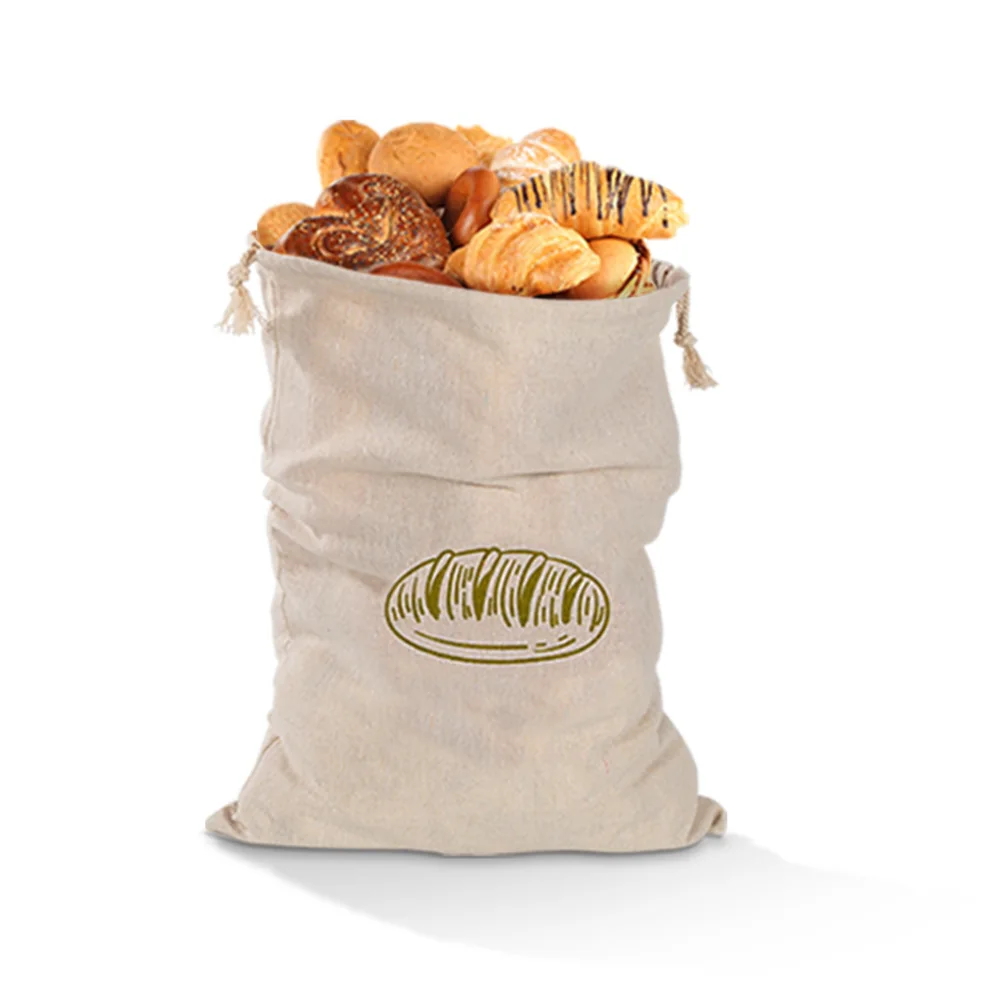
Plastic traps steam and softens the crust. The fridge stales bread faster than the counter. A close-woven bag does neither — it holds moisture in the crumb and lets the crust stay crust.
Why your loaf is hard by Wednesday
This is why the two habits most of us have are the two worst. A sealed plastic bag holds the loaf’s own steam against the crust until it goes soft and leathery. The fridge sits squarely in the temperature band where starch recrystallises quickest, so a loaf can be firmer after one cold night than after two on the counter.
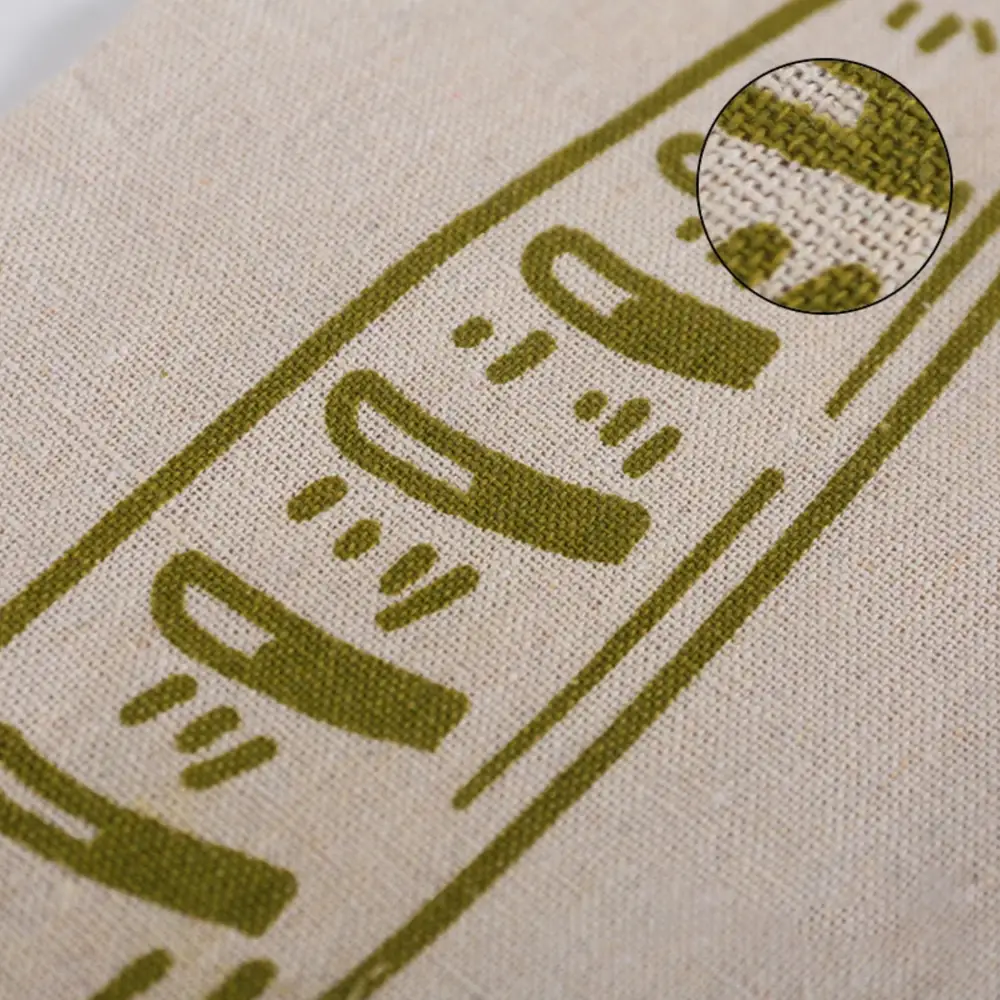
A woven bag does the opposite of both. The weave is close enough to slow the loss of moisture from the crumb, and open enough to let steam out instead of holding it against the crust. The loaf keeps its inside soft and its outside crisp, on the counter, at room temperature.
Three things a woven bag does that plastic cannot
It lets steam leave, and keeps the crust
A fresh loaf gives off steam for hours after it leaves the oven. Sealed in plastic, that steam has nowhere to go and condenses on the crust, turning it soft and chewy. The weave lets it pass while still slowing the crumb’s own moisture loss.
You notice it most on a loaf with a proper bake. A crust that took forty minutes to build should not go limp overnight, and in a woven bag it does not.
Room temperature, not the fridge
The bag is made for the counter. Starch recrystallises fastest in the cold, so the fridge works against you; the freezer stops the process outright but costs you a defrost. For the two or three days a home-baked loaf actually lasts, the counter in a woven bag is the right place.
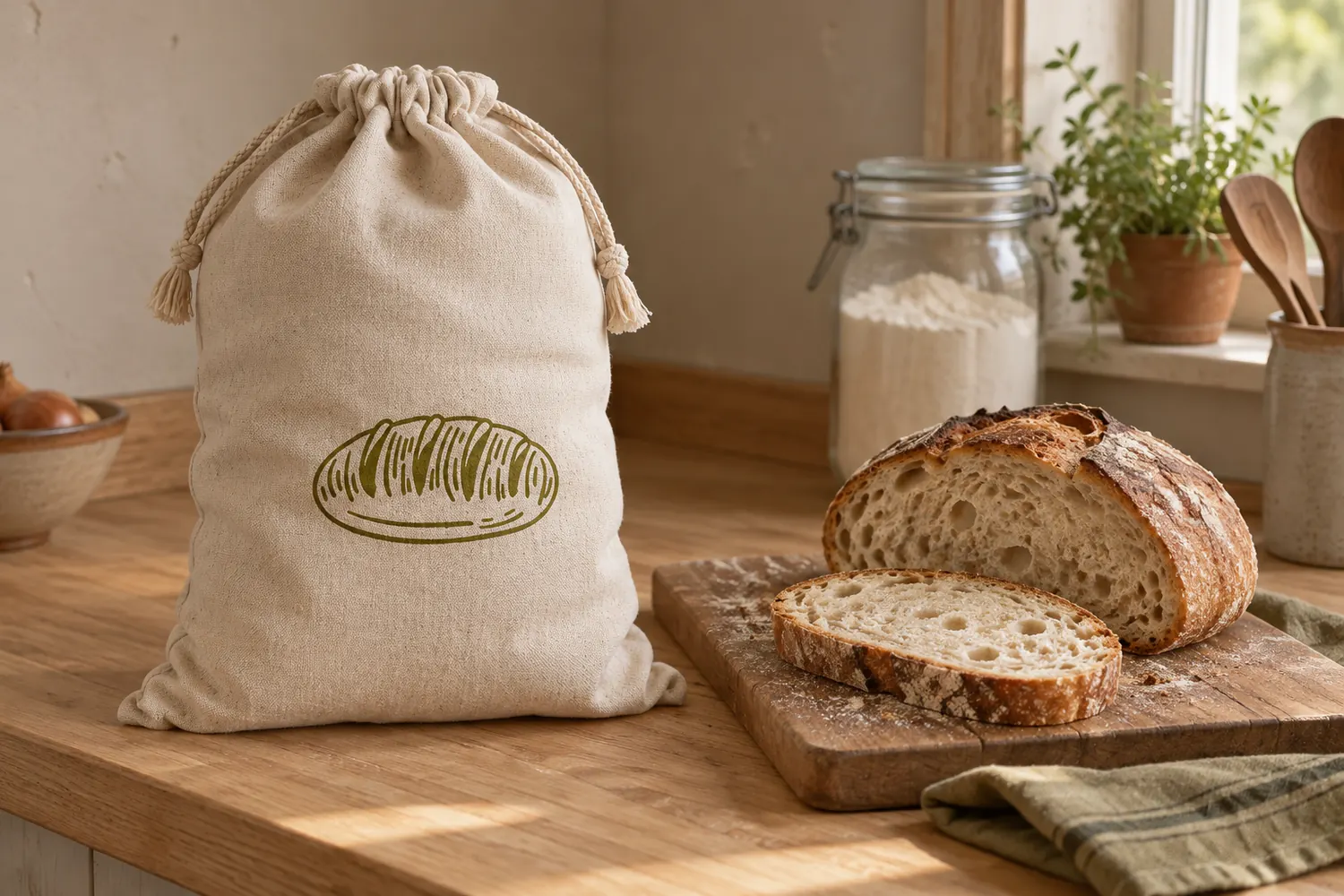
Keep the bag where you keep the bread board. Cut side down on the board, bag over the top, and the loaf holds up through the week’s baking.
It goes in the wash and comes back
Flour, crumbs and the odd smear of butter come out in a normal warm wash with the tea towels. There is no lining to peel, no seal to perish and no clip to lose. The bag comes out of the machine ready for the next bake.
It is one object that replaces a drawer of bags. Over a year of weekly baking that is fifty-odd plastic bags that never get bought.
What we look at before we sell a bread bag
Four checks, each one a reason we have turned bags down.
| Check | What fails it | This bag |
|---|---|---|
| Air through the weave | A bag you cannot see light through | Passes |
| Loaf clearance | Under 38 cm — a 2 lb loaf has to be folded in | 40 x 30 cm |
| Closure | Zip or clip — it seals, and a seal is the problem | Drawstring |
| Lining | Wax or plastic film — softens the crust | Unlined |
Three numbers behind the advice on this page
the fridge temperature at which starch in bread recrystallises into its most ordered form — more so than in a freezer. It is why a cold loaf firms up faster than one left on the counter.
— Foods, “Influence of Storage Temperature on Starch Retrogradation and Digestion of Steamed Bread”, 2024
the average rating buyers have given this bag. Every rating behind it is listed on our reviews page.
— Levainry buyer ratings, 2026
ratings behind that average, not a handful. The reviews page shows the photos and words that came with them.
— Levainry buyer ratings, 2026
A woven bag against the bag your loaf came in
| What happens | Plastic bag | Levainry bread bag |
|---|---|---|
| Crust after one night | Soft, slightly leathery | Still crisp |
| Crumb after two days | Soft, then suddenly gummy | Firms up slowly |
| Condensation inside | Visible by morning | None |
| Cleaning | Thrown away | Machine wash |
| Lifespan | One loaf | Years |
A plastic bag suits a soft supermarket sandwich loaf, which has no crust to protect. It is the wrong tool for anything baked with a crust on it.
“The mistake I made for years was putting bread in the fridge, because that is where you put things to keep them. Bread is the one thing in the kitchen the fridge actively ruins. Once I moved the loaf to the counter in a cloth bag, the difference on day two was not subtle.”— Tess Brandow, home baker, writes the guides on this site
Choosing a bread bag
What actually matters when you pick one
Size before anything else. A 2 lb tin loaf and a round boule need roughly the same footprint: about 40 by 30 cm of bag. Smaller than that and you are folding the loaf in; much larger and the bag bunches on the counter.
Weave, not thickness. A heavy canvas is not better than a medium weave — what counts is whether air moves through it. Hold a bag up to a window: you should see light through the cloth without seeing through it.
A drawstring, not a zip or a clip. A drawstring closes loosely, which is what you want. A zip seals, and a sealed bag is a plastic bag made of cloth.
The fibre matters less than people think. A close weave in cotton and a close weave in linen keep a loaf almost identically; an open weave in either lets the crumb dry. What the cloth has to do goes through it fibre by fibre.
Skip the waxed lining if you bake crusty bread. A wax coating makes a bag close to airtight, which suits a soft sandwich loaf and works against a sourdough crust.
Specifications
| Size | 40 x 30 cm (15.7 x 11.8 in) |
| Fits | A 2 lb tin loaf, a round boule, or two batards |
| Material | Natural woven plant fibre |
| Closure | Drawstring, both ends |
| Care | Machine wash warm, line dry |
| Lining | None — unlined and unwaxed |
Measurements and material are as declared by the maker. We list the fibre as the maker lists it: natural woven plant fibre.
Rated 4.92 / 5 across 1,219 ratings
Photos and words from verified buyers.
"Very practical bread bags, bread doesn’t dry out too quickly, very durable."
— Verified buyer, verified buyer
"The product matches the description, a high-quality item. I hope the baker in the family gets good use out of it."
— Verified buyer, verified buyer
"Very nice bread bag, thank you."
— Verified buyer, verified buyer
Photos from verified buyers. See our reviews page for more.

Tess Brandow · Home baker — she writes the guides on this site
Tess has baked the household’s bread for about fifteen years, two loaves most weeks, in an ordinary kitchen with an ordinary oven. She is not a professional baker and does not run a bakery. What she has is a long run of the same problem: a loaf that is worth eating on Monday and disappointing by Wednesday. She writes these guides from that, and from the cooling rack that is usually still full when she starts the next batch.
Reviewed and updated 2026-09-15. See how we test.
Questions people ask about bread bags
How long will bread last in a bread bag?
A home-baked loaf holds up two to three days on the counter in a woven bag, against about a day and a half loose on a board. A shop loaf with preservatives goes longer. The bag slows staling; it does not stop it.
Why shouldn’t you store bread in a plastic bag?
Plastic holds the loaf’s own steam against the crust. Within a night a crisp crust turns soft and slightly leathery, and by day three the trapped moisture makes mould more likely, not less.
Is a bread bag better than a bread box?
They do the same job by different means, and a box does it slightly better if you have the counter space — it holds a small still pocket of humid air. A bag costs a fraction as much, takes no counter space, travels, and goes in the wash. A box does none of those.
Does a bread bag work for sourdough?
It is what a woven bag is best at. Sourdough has the crust that plastic ruins and the open crumb that dries fastest in open air. Cut side down on the board with the bag over the top is the standard way to keep one.
What material is best for a bread bag?
A close-woven natural fibre, unlined. Weave matters more than the specific fibre: it has to pass air while slowing moisture loss. Waxed and lined bags trade crust for softness, which suits sandwich bread and not much else.
Can I keep the bread bag in the fridge?
You can, but do not. Bread stales fastest at fridge temperature, whatever it is wrapped in. Counter for two or three days; freezer, sliced, for anything longer.
How do you wash a bread bag?
Shake out the crumbs, then a normal warm machine wash with towels. Line dry. Skip fabric softener — it coats the weave and closes it up, which is the one thing you do not want.
What size bread bag do I need?
40 by 30 cm takes a 2 lb tin loaf, a round boule up to about 22 cm across, or two small batards. That covers almost everything a home oven turns out. A baguette needs a long narrow bag instead.
Bake it properly, then keep it properly
One bag, 19.99, free shipping and 30 days to send it back.
Add to cart →